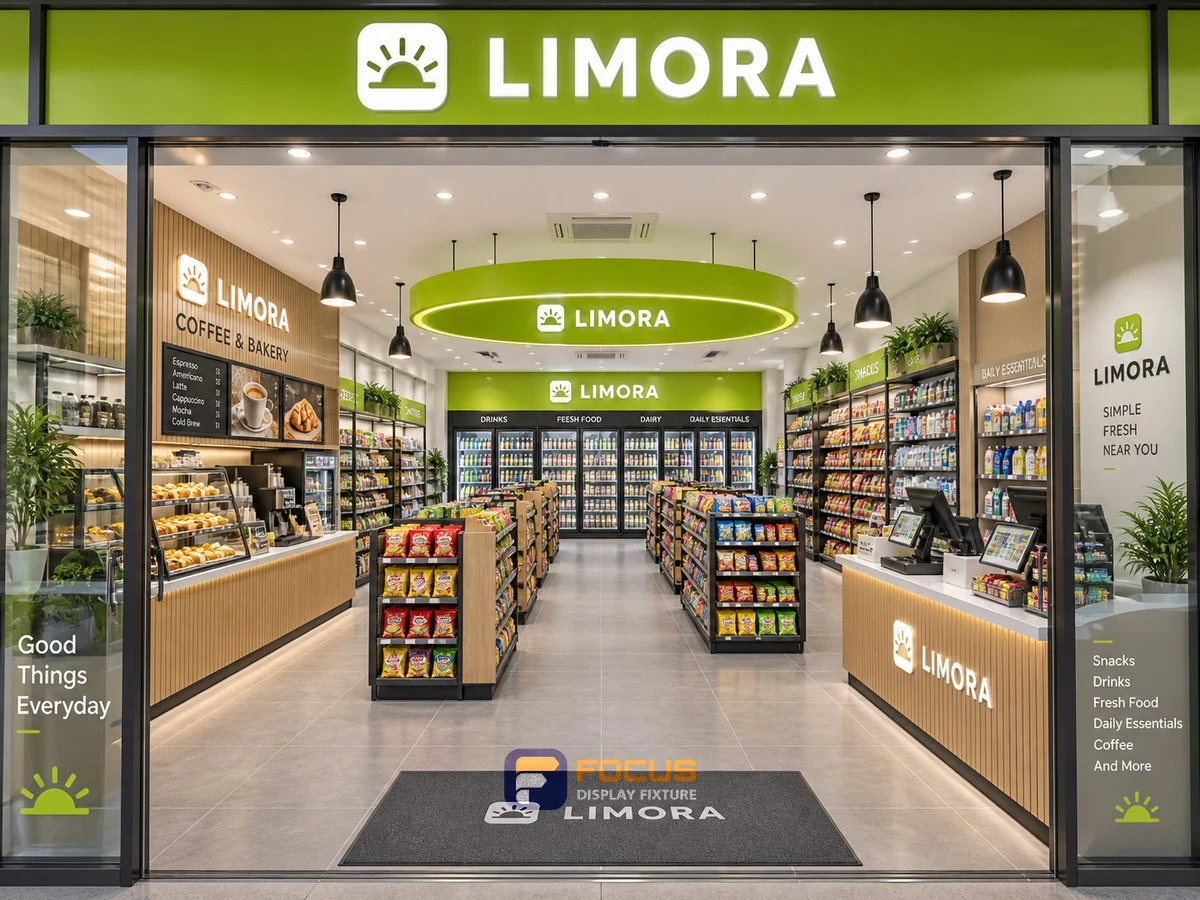
How to Choose the Produce Displays Configuration
Choose produce displays: presentation and cleaning, the four checks to record and the configuration comparison to prepare before ordering.
- Published
- 2026-09-15
- Content updated
- 2026-10-22
- Reading time
- 3 minutes
Editorial buyer guidance. Read our authorship and sourcing policy.
For produce displays, begin with presentation and cleaning. Measure the complete crate base and stacking features, then compare them with the support area. Prepare a configuration comparison covering crate footprint, tilt angle, liner detail, caster lock. An attractive individual cabinet may require ends, supports or neighboring fixtures to operate as intended. Review the complete combination and identify components supplied by others.
Three decisions for your fixture purchase.
- 01
Confirm presentation and cleaning
- 02
Check crate footprint alongside tilt angle
- 03
Prepare the configuration comparison
Choose the arrangement before the finish: produce displays
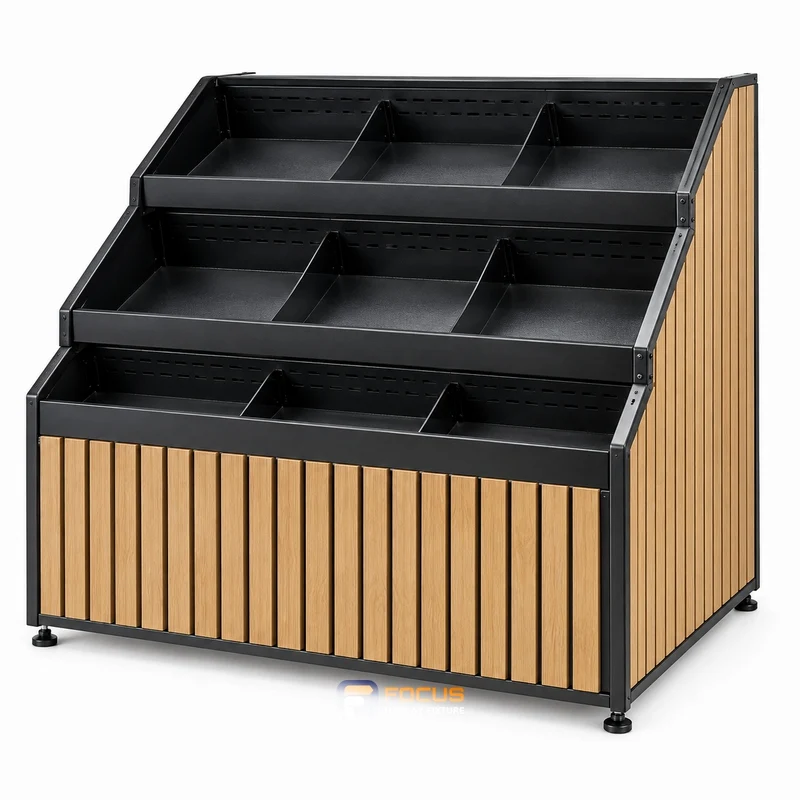
Compare the alternatives against the same operating task. Separate the components shared by a run from those needed for an independent unit, and list which accessories belong to each option. Use the operating crate or basket when reviewing the display. Angled presentation changes both reach and the tendency of goods to move. Identify removable liners, cleaning access and where dripping or damaged product is handled, without assuming that decorative wood is suitable for every wet use.
Four checks for the configuration comparison
Use these checks for produce baskets and crates. Record the value or decision, its evidence and any unresolved point beside the fixture reference.
- crate footprint · Measure the complete crate base and stacking features, then compare them with the support area.
- tilt angle · Review product and crate stability at the proposed display angle before choosing the layout.
- liner detail · Identify whether the liner is removable and how moisture or debris is cleared from the support.
- caster lock · Check that staff can reach and operate the wheel locks in the final loaded display position.
Compare the produce displays options
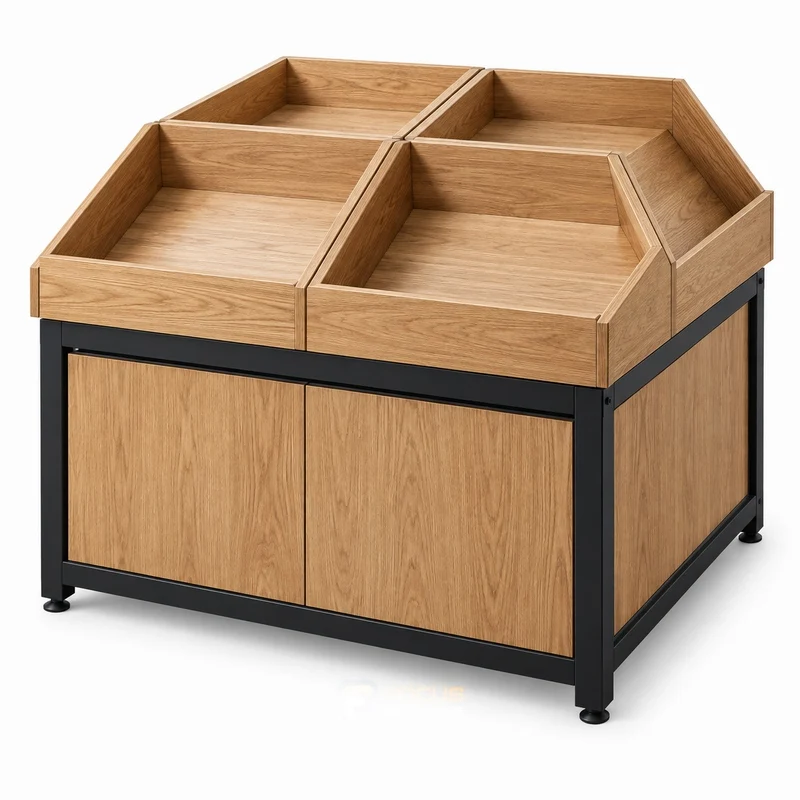
The starting arrangements are Sloping crate display, Flat produce table, Mobile basket fixture. Compare them for produce baskets and crates using the same configuration comparison. Use the operating crate or basket when reviewing the display. Angled presentation changes both reach and the tendency of goods to move. Identify removable liners, cleaning access and where dripping or damaged product is handled, without assuming that decorative wood is suitable for every wet use.
Worked planning example
Use a project-specific configuration comparison for produce displays. Measure the complete crate base and stacking features, then compare them with the support area. Identify whether the liner is removable and how moisture or debris is cleared from the support. No verified overall configuration is listed for this application in the current size catalog; obtain a dimensioned drawing rather than borrowing the dimensions of a shelving unit.
Review a complete arrangement
An attractive individual cabinet may require ends, supports or neighboring fixtures to operate as intended. Review the complete combination and identify components supplied by others. Check that staff can reach and operate the wheel locks in the final loaded display position.
Prevent this produce displays mistake
Selecting an incline solely from a lifestyle rendering. Measure the complete crate base and stacking features, then compare them with the support area. Identify whether the liner is removable and how moisture or debris is cleared from the support.
What to send with the configuration comparison
Send the selected fixture reference, the marked drawing and the intended use for produce baskets and crates. Include crate footprint and tilt angle, then document liner detail and caster lock. State the quantity, destination and any components supplied by others. List alternatives separately so a change of configuration does not silently change the comparison.
Translate the guidance into a specification check.
Use these parameters to record the actual merchandise, clear dimensions and configuration required for the cabinet quotation.
Source: current fixture dimension catalog. Catalog dimensions apply to the named series and arrangement; confirm the selected configuration against the project drawing.

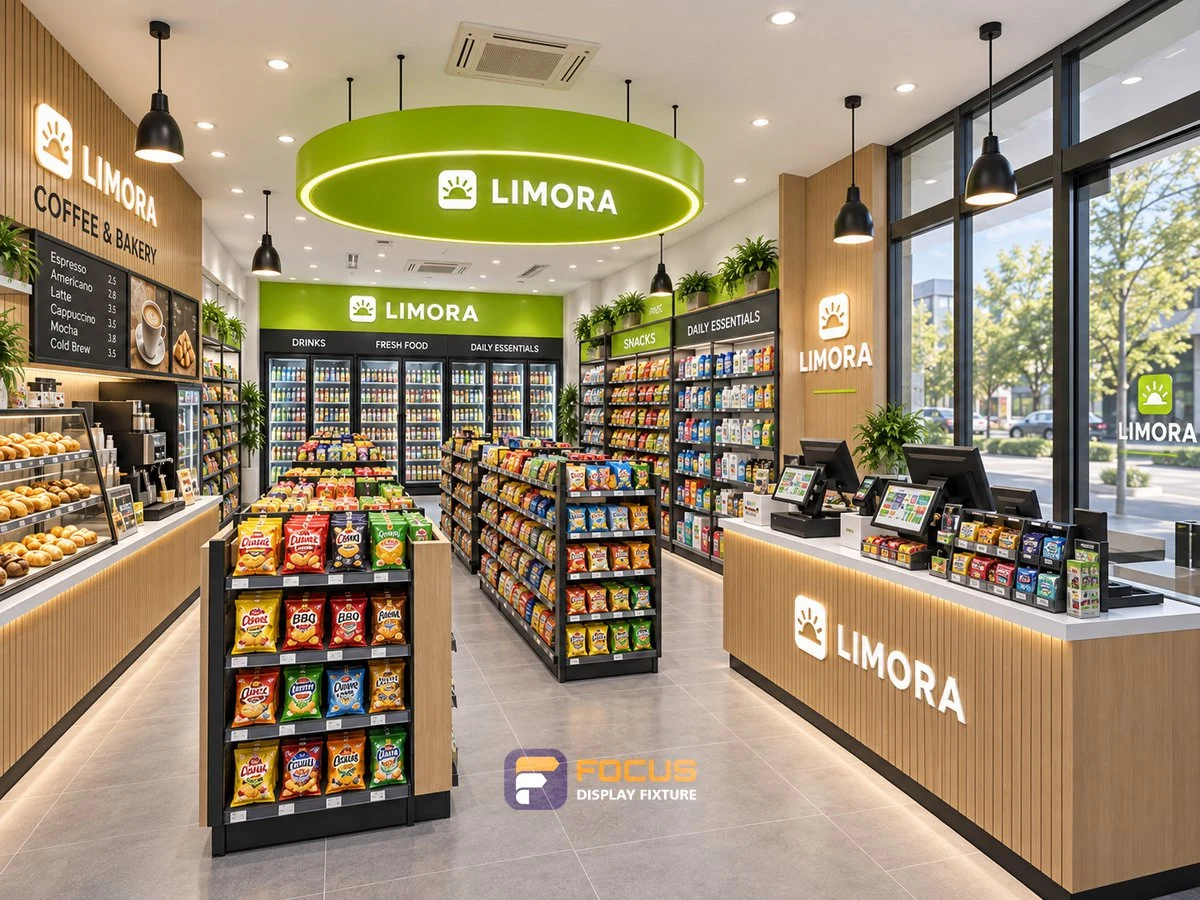
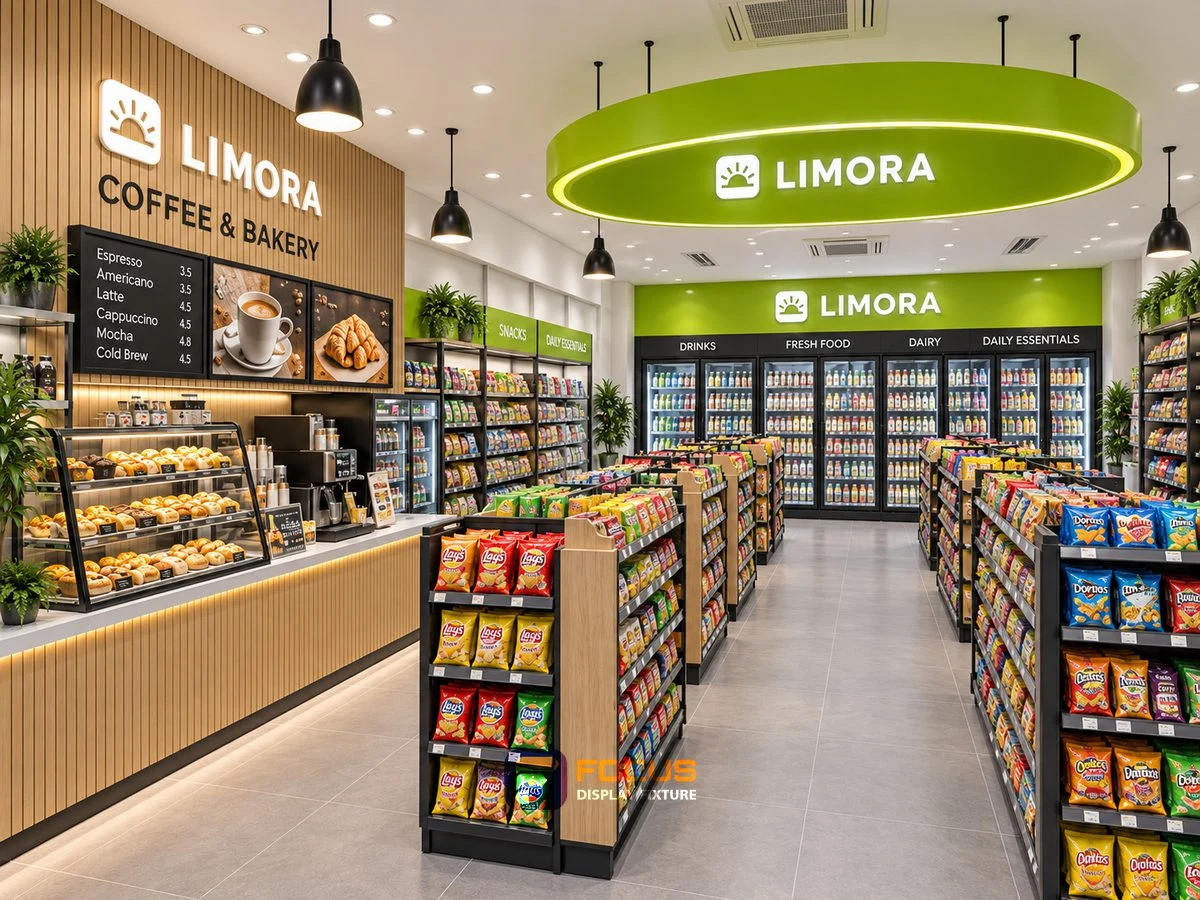
Store 12 · Fresh lime convenience store
- Market
- Design reference
- Store format
- Store layout reference
- Project scale
- Project-specific
Challenge
Coordinate produce baskets and crates with presentation and cleaning.
Planning response
Bring crate footprint, tilt angle, liner detail, caster lock onto the fixture review record.
Reference interpretation
The image illustrates an arrangement; installed quantities and site dimensions follow the project brief.
Explore More Store ArrangementsCompare one controlled basis.
Turn the review into an order record.
An attractive individual cabinet may require ends, supports or neighboring fixtures to operate as intended. Review the complete combination and identify components supplied by others. Check that staff can reach and operate the wheel locks in the final loaded display position. Keep the decision with the selected fixture reference, quantities and drawing revision.
Review FOCUS capabilities →What still needs configuration confirmation.
AI-assisted purchasing guidance with illustrative calculations; project engineering remains configuration-specific.
Prepare the required inputs →Avoid these shortcuts.
- Treating a reference image as an approved production specification.
- Comparing suppliers without identical dimensions, quantities and delivery scope.
- Separating material, lighting or hardware decisions from the drawing revision.
- Leaving packing, local installation and site interfaces undefined.
Before the next approval.
Download this guide and checklist ↓- Crate footprint: Measure the complete crate base and stacking features, then compare them with the support area.
- Tilt angle: Review product and crate stability at the proposed display angle before choosing the layout.
- Liner detail: Identify whether the liner is removable and how moisture or debris is cleared from the support.
- Caster lock: Check that staff can reach and operate the wheel locks in the final loaded display position.
- Attach the configuration comparison and the selected drawing revision
- Mark unresolved points and assign a responsible project contact
- Record each open point, owner, due date and required evidence.
Answers to the next practical questions.
01What information is needed for this produce displays configuration check?+
Provide crate footprint, tilt angle, liner detail, caster lock, the fixture reference and its drawing revision. Measure the complete crate base and stacking features, then compare them with the support area.
02Why should I check presentation and cleaning?+
Selecting an incline solely from a lifestyle rendering. Review product and crate stability at the proposed display angle before choosing the layout.
03Does this configuration comparison confirm a price or product rating?+
No. It identifies the inputs needed for a configuration review. Dimensions, documented performance, included items, quantities and delivery terms must be confirmed for the selected assembly.
Trace the supporting information.
Current dimension catalog ↗Updated fixture dimensions, series and configuration scope.
Content review policyGuidance published 2026-09-15. Content updated: 2026-10-22. Project engineering approval and physical testing are separate.
Move from research to a fixture specification.
Keep building the specification.
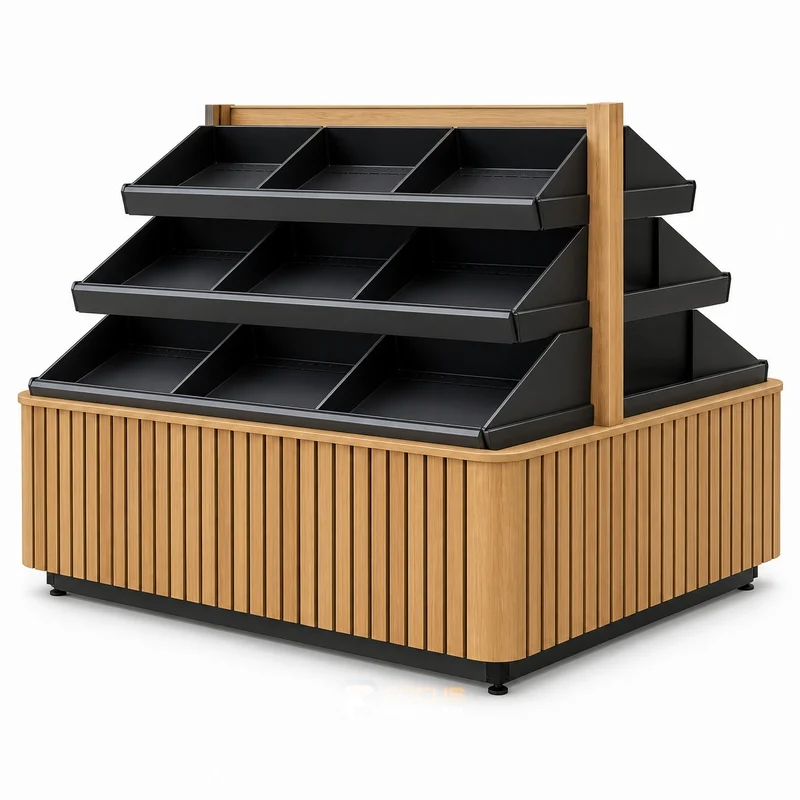
Planning Merchandise Capacity for Produce Displays
For produce displays, begin with presentation and cleaning. Measure the complete crate base and stacking features, then compare them with the support area. Prepare a merchandise capacity worksheet covering crate footprint, tilt angle, liner detail, caster lock. For angled shelves, hooks, trays and irregular products, use a representative arrangement rather than applying a rectangular-grid calculation. Check item mass, distribution and the verified assembly loading conditions separately.
Read next →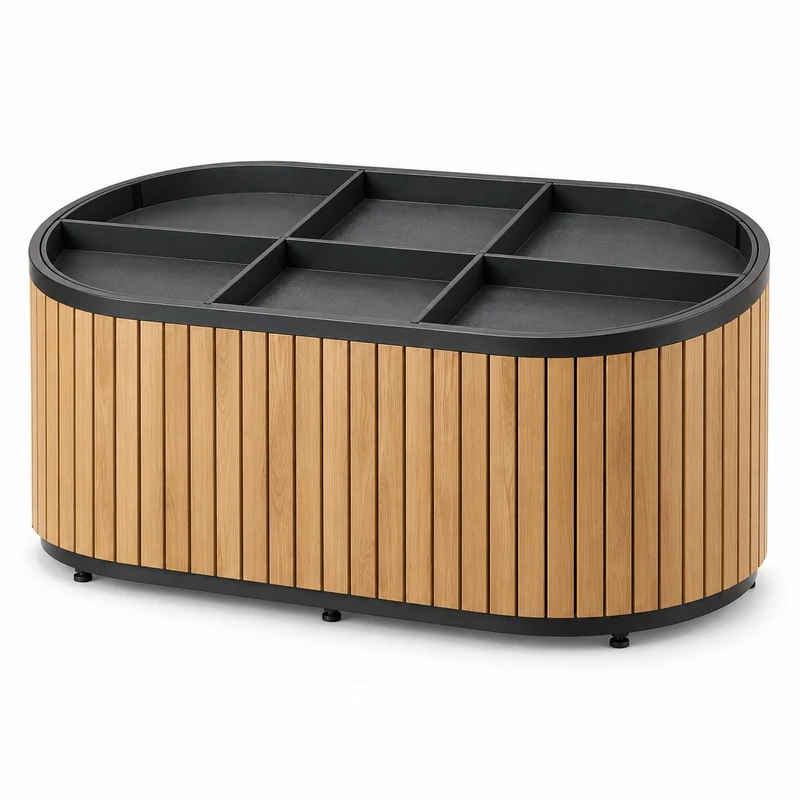
Choosing Materials and Finishes for Produce Displays
For produce displays, begin with presentation and cleaning. Measure the complete crate base and stacking features, then compare them with the support area. Prepare a material and finish schedule covering crate footprint, tilt angle, liner detail, caster lock. Compare samples in the intended lighting and cleaning conditions. Record what was approved and which fixture references it applies to, including visible joints and replacement components.
Read next →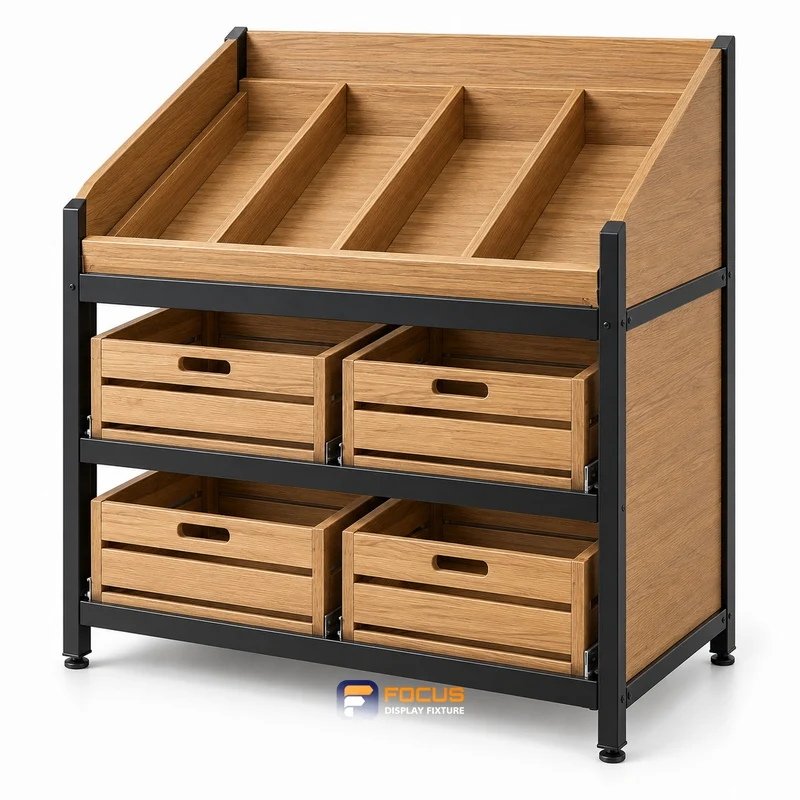
Staff Access and Replenishment Around Produce Displays
For produce displays, begin with presentation and cleaning. Measure the complete crate base and stacking features, then compare them with the support area. Prepare an access and replenishment check covering crate footprint, tilt angle, liner detail, caster lock. Identify which items must move for refill or maintenance and whether that interrupts another operation. Set site clearances with the responsible designer and applicable local requirements, not a universal aisle number.
Read next →Request a configuration for your next fixture order.
Send available dimensions, merchandise package sizes, cabinet quantities, destination and required options. FOCUS can review a specific configuration and quotation scope.
Request a Fixture Quote