Substrate
Record the board or metal specification separately from the decorative face. A wood appearance alone does not identify its construction.
 Start a Project ↗
Compare fixture materials by application, finish and maintenance needs.
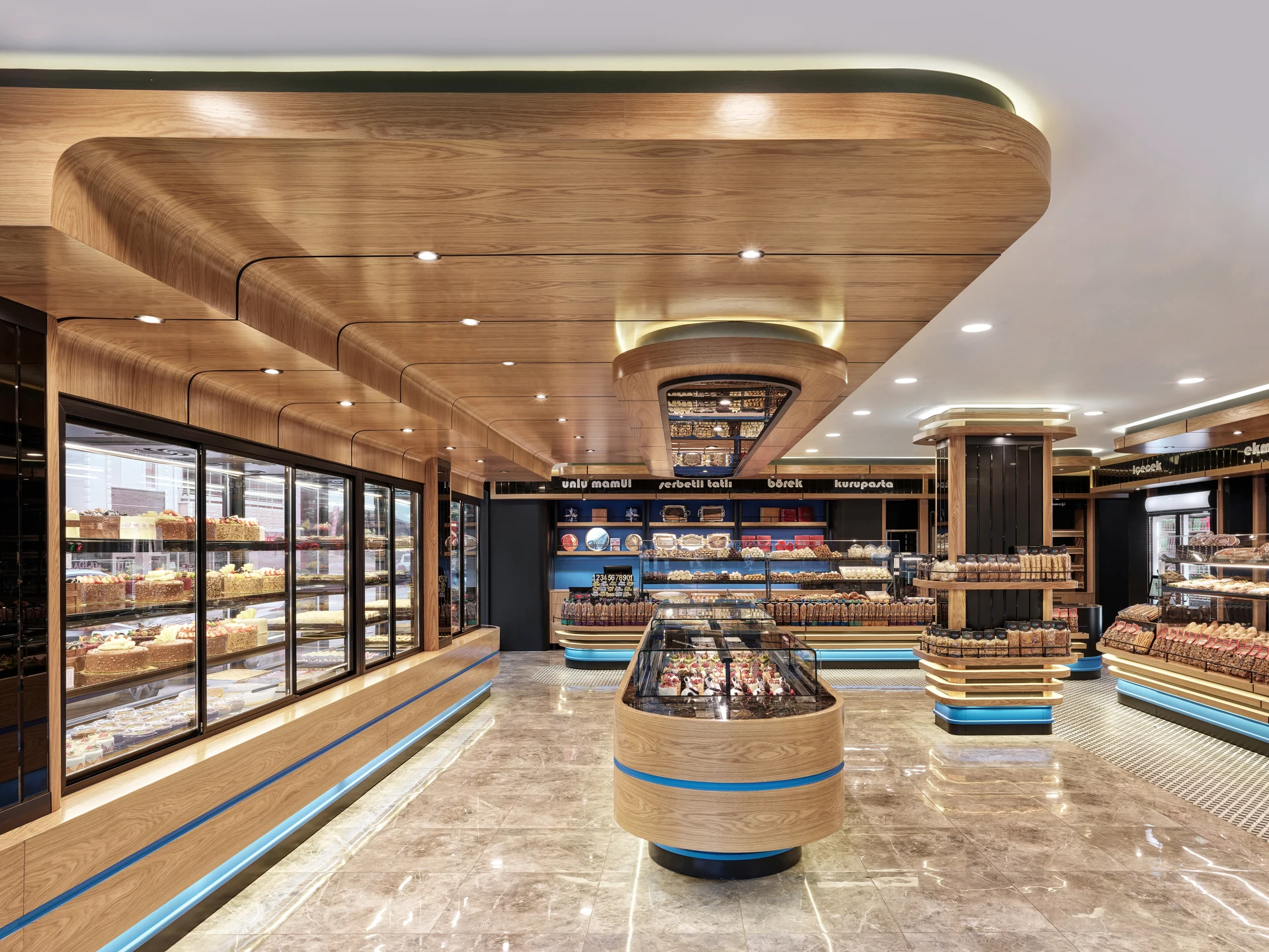
A wood-grain surface may be laminate, veneer or another finish. Record the substrate and edge detail separately from the visible color. Use a physical sample to agree the appearance where color matching matters.
Coffee and foodservice areas need a cleaning and exposure review. Consider joints, openings, removable panels and the cleaning agents used by the store. Material selection must reflect the actual application.
Assign each finish a project code and connect it to the product references that use it. Record sample approval and any direction of grain or visible joint. Replacement parts should refer back to the same schedule.
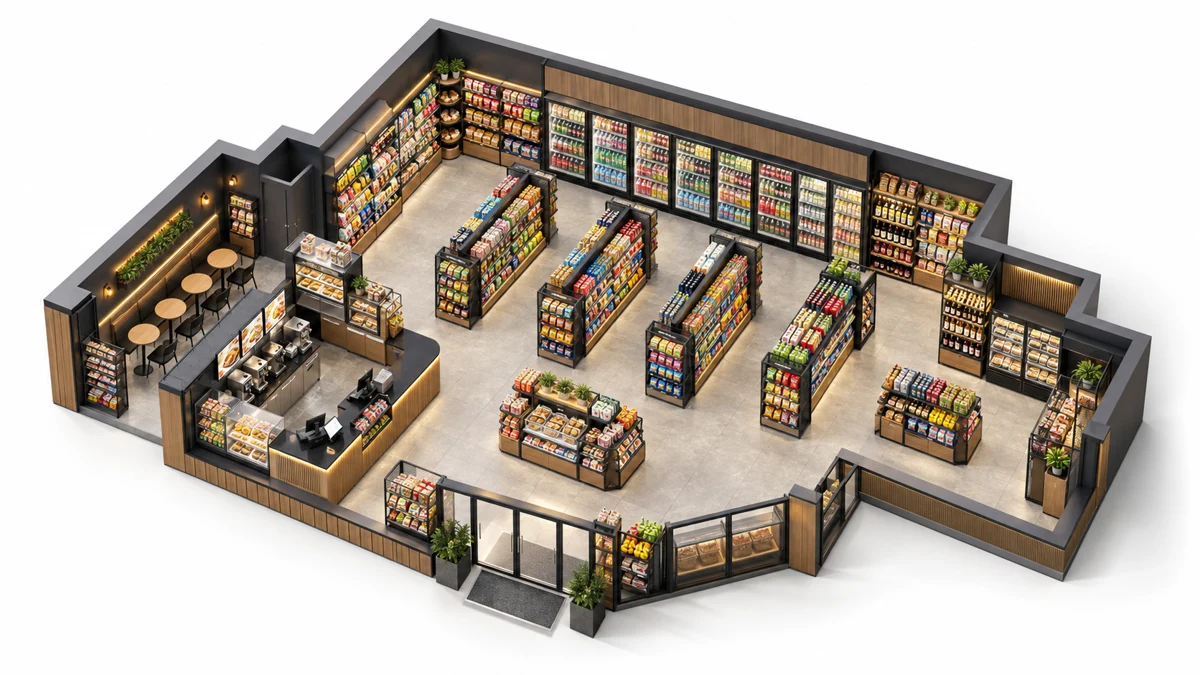
Connect the shelf frames, cabinet faces, service tops, signs and lighting through a finish schedule. A consistent appearance still allows different construction around dry merchandise, cleaning zones and equipment.
Review the physical finish sample and the selected component information together. Keep color, texture, visible joints and replacement parts tied to the same reference.
Build your material schedule →| Material direction | Configuration | Review points | Typical application |
|---|---|---|---|
| Wood appearance | Veneer or laminate over the selected substrate | Direction of grain, edge banding and joint locations | Display faces and warm customer-facing areas |
| Powder-coated metal | Selected steel construction and coating | Color sample, weld treatment and visible fixings | Shelf supports, frames and coordinated trim |
| Service worktops | Selected solid surface, laminate or stainless option | Equipment weight, openings, splash exposure and cleaning | Coffee, foodservice and checkout work areas |
| Glass & acrylic | Configuration-specific transparent components | Edge treatment, support, thickness and service access | Protected display, visibility and product separation |
| Hardware & lighting | Agreed handles, hinges, locks and lighting components | Operation, component records and replacement access | Daily use, security and display readability |
Record the board or metal specification separately from the decorative face. A wood appearance alone does not identify its construction.
Review exposed edges, grain direction, visible joints and transitions between materials. Check a representative detail where appearance matters.
Discuss moisture, spills, abrasion and the intended cleaning routine. Review the product and component instructions for the selected material.
Give each approved sample a code, date and fixture scope. Keep the control sample and drawing revision connected for repeat orders.
Specify the doors, drawer movement, handles, locks and service panels needed in daily use. Plan access for replacement and adjustment.
Compare supplier options using the same substrate, thickness, surface, edges and hardware. A similar photograph is not a complete specification.
Share the cabinet type, dimensions, merchandise and quantity. We will review display, storage and combination requirements for your quotation.
Start with a fixture reference, a floor plan or a description of the store you want to create.
Browse fixtures → Open WhatsApp ↗